First Red Wheel plaque unveiled at Hatton Locks
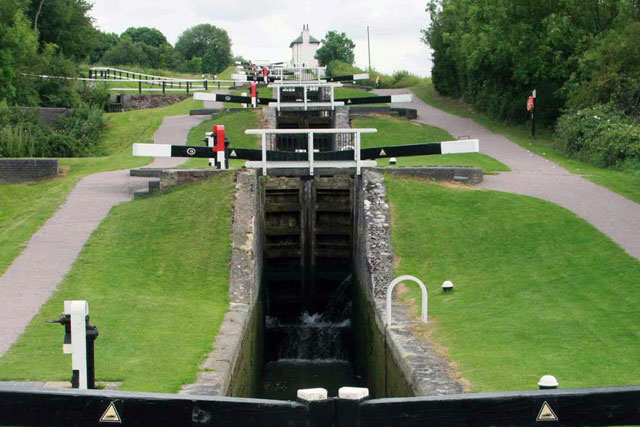
The historical importance of a number of Britain’s most significant canal structures has been formally recognised with a ceremony at Hatton Lock Flight on the Grand Union Canal in Warwickshire
Unveiled by the Transport Trust, the ‘Red Wheel’ plaques will mark the important role of Britain’s inland waterways in the development of transport and the Industrial Revolution. The formal unveiling at Hatton Locks commemorated a series of heritage site unveilings across the waterways. In addition to the spectacular Hatton Flight of 21 locks, another five Red Wheel plaques are also being unveiled at the following locations:
(1) Edstone Aqueduct - a Grade II listed cast iron trough aqueduct on the Stratford-Upon-Avon Canal;
(2) Gas Street Basin - a section in central Birmingham, which once boasted more canals than Venice;
(3) Braunston - a picturesque canal village and boat-building centre at the crossroads of the Grand Union and Oxford canals;
(4) Burnley Embankment - one of the Seven Wonders of the Waterways on the Leeds & Liverpool Canal;
(5) Pontcysyllte Aqueduct - an astonishing Grade I listed monument on the Llangollen Canal in North Wales, and the tallest aqueduct in the UK.
At its peak, from 1760 to 1840, the inland waterways network stretched over 5,000 miles and carried 30 million tonnes of goods and raw materials across Britain every year. Almost all the major cities and towns had a canal, from London to Lancaster and from Wales to the Wash.
Nigel Crowe, head of heritage at British Waterways, said: “In the next few weeks, the canals and rivers that made the country a great industrial nation will be transferred into the charitable sector as the Canal & River Trust. Communities will have a greater role in looking after their local canal so it’s great that the Transport Trust has recognised their important place in the nation’s history.”